GCAA CBTA  ·  Initial

Dangerous Goods Training for Cabin Crew

GCAA FIT 4.1.JIATA CBTA 7.9.A4 hours
Dangerous Goods Training for Cabin Crew training at DGR Aviation, Dubai

Home / Courses / 4.1.J

Course overview

Full course description available on request.

Who should attend

  • Newly recruited cabin crew members
  • Existing cabin crew requiring initial dangerous goods training
  • Flight attendants working for commercial, charter or private aircraft operators
  • Cabin crew members responsible for passenger safety and in-flight emergency response

Course objectives

Upon successful completion, participants should be able to:

  • Understand the basic principles of dangerous goods
  • Recognise the nine classes of dangerous goods and their associated hazards
  • Identify dangerous goods that passengers and crew may or may not carry
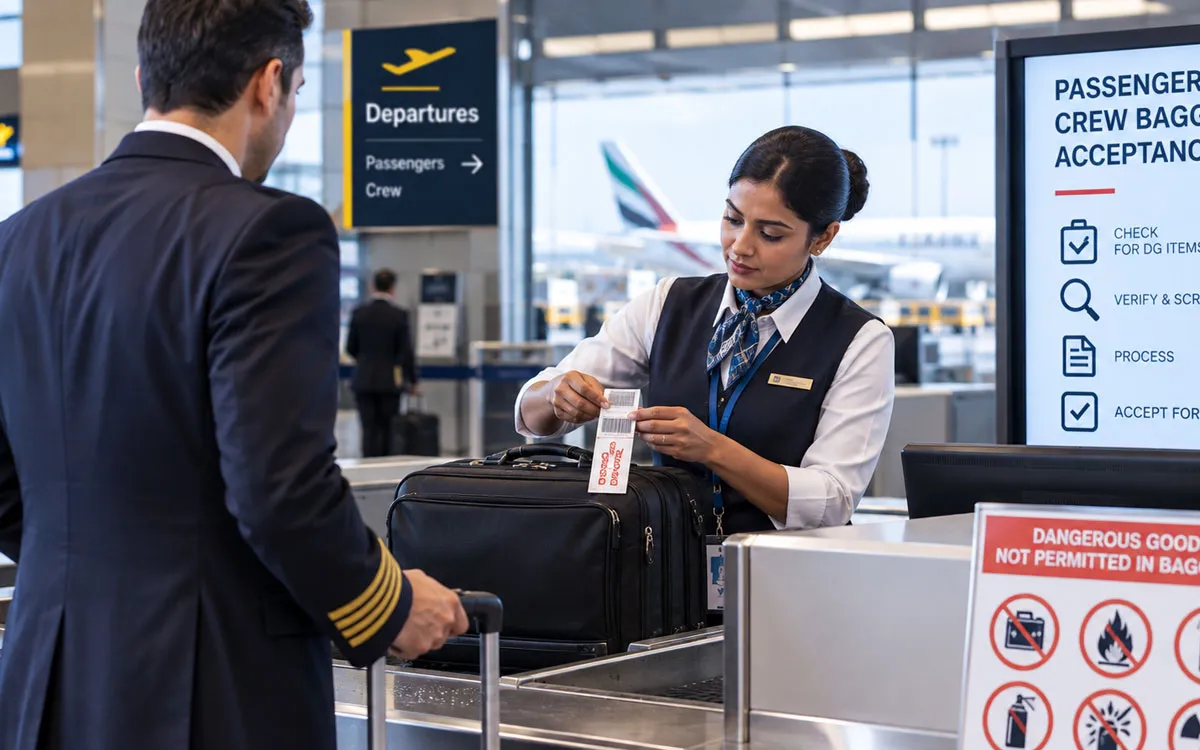
  • Apply the relevant restrictions for checked and carry-on baggage
  • Recognise hidden or undeclared dangerous goods
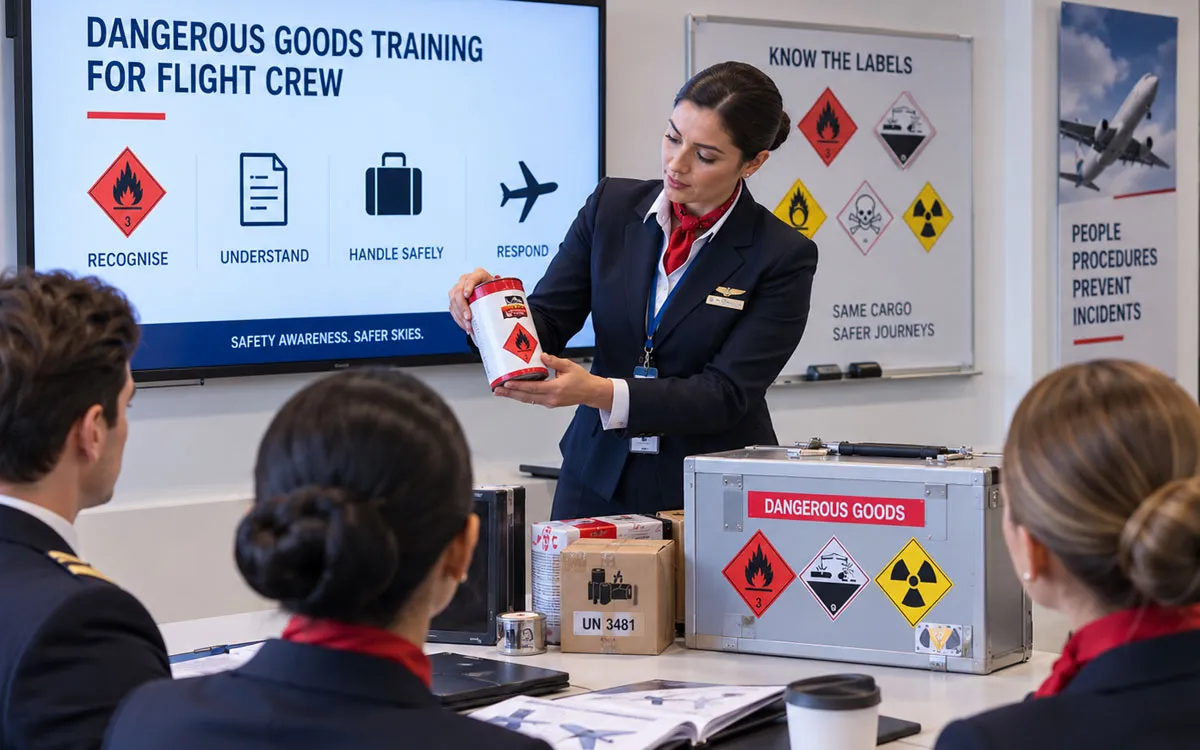
  • Understand dangerous goods markings, labels and hazard symbols
  • Follow procedures for handling suspected dangerous goods
  • Respond appropriately to dangerous-goods incidents and emergencies on board
  • Report dangerous-goods occurrences in accordance with company procedures
  • Perform their assigned responsibilities safely and in compliance with GCAA requirements

About the course

This course is designed for airline cabin crew members and supervisors where they will learn the skills and knowledge needed to excel while handling Dangerous Goods. During the course, you will learn about the duties and responsibilities of a Cabin Crew member, including safety and emergency procedures. You will also receive training on how to detect hidden Dangerous Goods in cargo and mail, accept passenger baggage and verify that the requirements to carry them are met. In addition to classroom instruction, you will participate in hands-on training sessions, including simulated flight scenarios, to give you real-world experience. Upon completion of the course, you will be prepared to interpret hazard communication, apply emergency procedures and report Dangerous Goods accidents.

Often taken with

Functions most 4.1.J delegates also hold.

Frequently asked

Who needs GCAA 4.1.J training?
Cabin crew operating for UAE, foreign or private air operators, including operators that do not carry dangerous goods as cargo. Cabin crew are the personnel closest to the items passengers actually bring on board, which is where most in-flight dangerous goods events originate.
How long is the cabin crew dangerous goods course?
4 hours, matching the flight crew category. It can be delivered at the DGR Aviation training centre in Port Saeed, Dubai, or in-house at an operator’s cabin crew training facility.
Why do cabin crew need dangerous goods training?
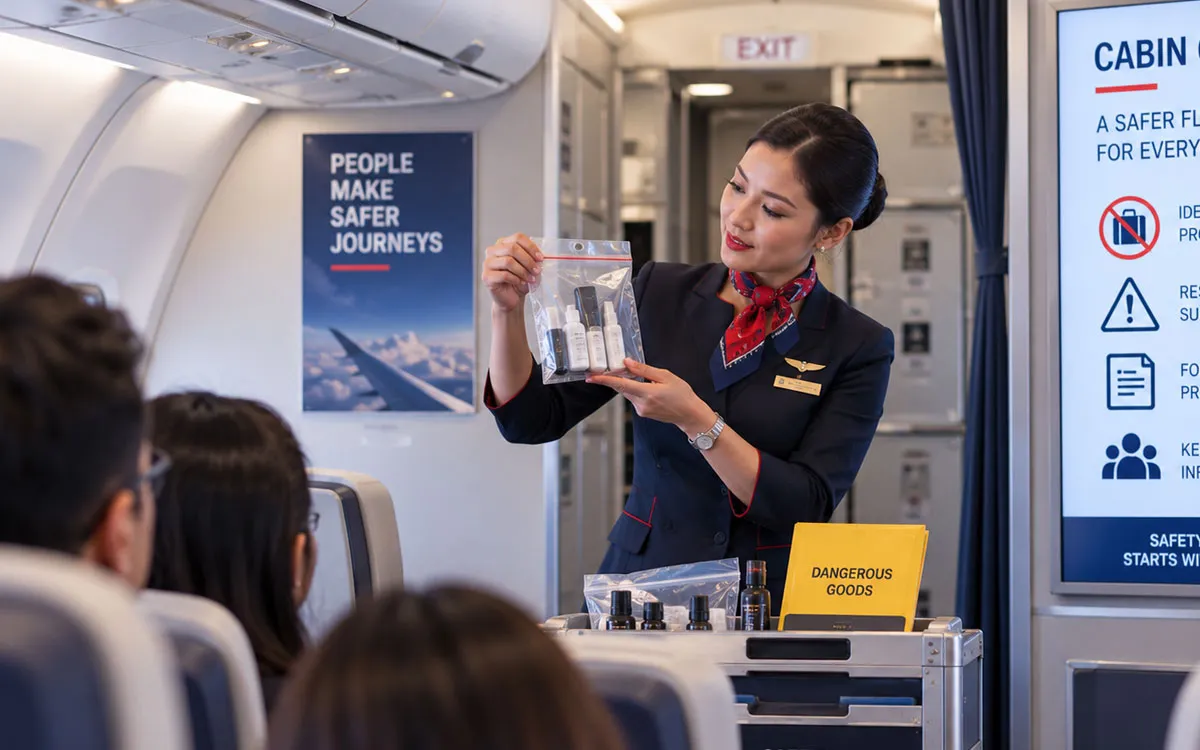
Because passengers carry restricted items on board: everyday items like power banks, spare lithium batteries, e-cigarettes, aerosols and medical equipment. Cabin crew identify these items, apply the carriage rules, and are the first responders if there is any dangerous goods occurrence in the cabin.
Does the course cover lithium battery fires and thermal runaway in the cabin?
Recognising and responding to an in-flight dangerous goods event is central to the cabin crew function this category covers, and lithium battery incidents are the most common example. Raise your operator’s specific containment equipment and procedures during the session so the training reflects what crew have on board.
What is the difference between the cabin crew course and the passenger handling course?
4.1.J is for cabin crew and deals with items on board and in-flight response. 4.1.F is for passenger handling staff at the airport: check-in, boarding areas and direct passenger contact on the ground. Screening the item at check-in and managing it in the cabin are separate functions with separate certificates.
Can this be delivered as part of our cabin crew recurrent training?
In-house delivery is available and a 4-hour module fits readily inside an existing recurrent block. Contact DGR Aviation with your training calendar to arrange scheduling.
How often does cabin crew DG training need renewing?
All dangerous goods training certifications are valid for two years. Recurrent intervals are normally set by the operator’s approved training programme. Confirm the applicable cycle with your training department.
How do we book training for a cabin crew group?
Contact DGR Aviation on +971 4 267 6745 or +971 56 534 9234, or email info@dgraviation.com, with crew numbers and preferred dates.
How long is the 4.1.J certificate valid?
Two years. Recurrent training must be completed before the certificate expires to maintain the function without a gap. We record the expiry at the time of certification and flag the renewal window ahead of time.
Can 4.1.J be delivered at our facility?
Yes. This function is regularly delivered on-site across the UAE, on your shift pattern and using your own documentation as the worked examples. The approval, assessment and certificate are identical to the classroom course.
What is the pass mark?
80% for a pass and 90% for a distinction, assessed on Knowledge, Skills and Attitude by the training provider. Where applicable, an employer assessment should be completed within 12 months.
How do I confirm this is the right function for my staff?
Use the Course Finder to map a job role to its GCAA function, or contact us and we will return a written training matrix for your team.

Tell Us The Job Functions
We’ll Name The Course.

Join a free demo class with a GCAA-approved instructor. See how the training works and find the right course for every role — no obligation, no cost.

Free Demo Class

Join a free demo class with a GCAA-approved instructor. See how the course works, understand what your role needs, and ask your questions before you book.

Where *

Prefer the full page? Open the full form

Privacy

Cookie preferences

Strictly necessary

Always on

Required for the site to function — page navigation, form submission, security, and remembering this cookie choice. They store no marketing identifiers and cannot be switched off.

Analytics

Help us understand which courses and pages people look for, so we schedule the right cohorts. Aggregated and never used to identify you individually.

Marketing

Let us measure which adverts led to a training enquiry, and avoid showing you the same advert repeatedly. Set by our advertising partners.